Doomsday Book
By: Connie Willis
I only discovered Connie Willis recently, but I've enjoyed (to that level of enjoyment where I'll stay up far too late if I'm 150 pages or less from the end because I can't bear to sleep without finishing) the three books of hers that I've read so far. They strike the same notes of pleasure for me that Laurie R. King's books do. History, a hurtling plot, and characters that make me both hate and grudgingly delight in the alternating story lines that dangle cliffhangers at the end of every chapter.
The Robot
by: Paul E. Watson
(forthcoming July 2011, from Razorbill)
A friend of mine who really knows her YA books (she's the children's buyer for a local bookstore) gave me this ARC because I liked Girl Parts by John M. Cusick. She liked this novel better, but I have to disagree and say that, in my mind, Girl Parts still wins.
The Magician King
by: Lev Grossman
(forthcoming August 2011, from Viking)
Lev Grossman has said that the version of the manuscript that was set in the ARCs for this novel and the final draft are completely different beasts, so I'll only say that I enjoyed it very much. I had a difficult time with The Magicians, mostly because I spent the entire novel wishing I could punch the main character in the face. It made me angry, and though I admired the intelligence and grace of the writing, I was not planning to read the sequel. But after reading this, I'm excited to see the final incarnation. The characters are firmly entrenched in my imagination, even Quentin, who shocked me with how much I found myself wanting something good to happen to him and who I only rarely wanted to punch.

Showing posts with label books consumed this month of.... Show all posts
Showing posts with label books consumed this month of.... Show all posts
Monday, May 2, 2011

Tuesday, April 12, 2011
march reading
The Family Fang
by: Kevin Wilson
(forthcoming, August 2011, HarperCollins/Ecco)
This novel is so lovable, so smart, sharp, and bizarrely funny, that it overcame my long-held prejudices against the brilliantly dysfunctional family saga. The Fang family is odd. In fact, the four characters who make it up--Caleb and Camille (Mr. and Mrs.), Buster and Annie (brother and sister)--are downright weird. Caleb and Camille are performance artists, the kind of people who wreck carefully planned havoc on ordinary life in order to say something, to make the quotidian into an occasion that is probably surreal, embarrassing, and shocking, but, at the very least, unforgettable. They throw their children (child A, child B) into their pieces and, predictably, leave them with scars. Annie becomes a drunken, moderately successful actress. Buster grows up to be a moderately successful journalist who persistently fails to finish his second novel.
But as their story becomes increasingly strange, the family Fang becomes increasingly less so. They grow familiar. They have hearts and warmth to them. They refuse to be limited by quirk, turning into people who you want to spend time with and want to get back to. They put on performances full of flashy, unlikely incident for each other and for themselves, but they are so tenderly written that you feel like you're standing on stage right next to them, watching their faces while they read their lines.
I liked it so much that I'm going to hang onto my ARC, just in case I want to read it again before it comes out. And just look at what a magical cover it has!

How to Live Safely in a Science Fictional Universe
by: Charles Yu
This is one of those books that I appreciated, but didn't feel. It's ambitiously and elegantly well-written. I get why it received sheaves of thrilled reviews (NY Times, for example, or WIRED). It's perfect for anyone, especially men (it's built around a son's search for his father, who is lost in time), who has a fondness for both Douglas Adams and Jonathan Safran Foer. It's an extravagant, circuitous time-travelling journey that might have turned into a farce if it weren't so longingly sad.
But, for me, it just didn't hit the right spot.
by: Kevin Wilson
(forthcoming, August 2011, HarperCollins/Ecco)
This novel is so lovable, so smart, sharp, and bizarrely funny, that it overcame my long-held prejudices against the brilliantly dysfunctional family saga. The Fang family is odd. In fact, the four characters who make it up--Caleb and Camille (Mr. and Mrs.), Buster and Annie (brother and sister)--are downright weird. Caleb and Camille are performance artists, the kind of people who wreck carefully planned havoc on ordinary life in order to say something, to make the quotidian into an occasion that is probably surreal, embarrassing, and shocking, but, at the very least, unforgettable. They throw their children (child A, child B) into their pieces and, predictably, leave them with scars. Annie becomes a drunken, moderately successful actress. Buster grows up to be a moderately successful journalist who persistently fails to finish his second novel.
But as their story becomes increasingly strange, the family Fang becomes increasingly less so. They grow familiar. They have hearts and warmth to them. They refuse to be limited by quirk, turning into people who you want to spend time with and want to get back to. They put on performances full of flashy, unlikely incident for each other and for themselves, but they are so tenderly written that you feel like you're standing on stage right next to them, watching their faces while they read their lines.
I liked it so much that I'm going to hang onto my ARC, just in case I want to read it again before it comes out. And just look at what a magical cover it has!

How to Live Safely in a Science Fictional Universe
by: Charles Yu
This is one of those books that I appreciated, but didn't feel. It's ambitiously and elegantly well-written. I get why it received sheaves of thrilled reviews (NY Times, for example, or WIRED). It's perfect for anyone, especially men (it's built around a son's search for his father, who is lost in time), who has a fondness for both Douglas Adams and Jonathan Safran Foer. It's an extravagant, circuitous time-travelling journey that might have turned into a farce if it weren't so longingly sad.
But, for me, it just didn't hit the right spot.
Tuesday, March 1, 2011
february reading
The Imperfectionists
by: Tom Rachman
I was told to read this book by several people, but I didn't actually pick it up until I heard Rachman being interviewed on the radio. It is a wonderful book. It's about the kind of things that make up real life and yet can so often be tiresome in fiction--love affairs, regrets, embarrassments, choices, work, sex and age and death. But this novel is a collection of tiny, intense portraits that you fall into. Stories that are bigger on the inside than you might expect. Reading it puts you inside the skin of eleven other people living eleven other lives, and the illusion is incredibly satisfying,
Divergent
(forthcoming: May 2011)
by: Veronica Roth
Dystopic adventure romp for teenagers. A clever, if rather unbelievable, portrait of the future. I mostly liked the characters and enjoyed the story, but found the romance tiresome. I can see it being incredibly popular though, and it would be a perfect fit for kids who like both Suzanne Collins and Tamora Pierce.
Red Glove
by: Holly Black
(forthcoming: April 2011)
I think this series is absolutely delicious. I love stories about clever, clever con men with hearts of gold, and the addition of magic makes it absurdly fun. Visual candy for the imagination. I like the nastiness that the story insists on, the way it doesn't offer absolution with bloodless crimes or simple characters. The people in this world are people who I want to spend time with because I find them fascinating, not because I'd want them for friends, and that is refreshing.
Shades of Milk and Honey
by: Mary Robinette Kowal
I love Jane Austen, so I was very dubious when my friend, Kat, sent me this book. Jane Austen with magic did not sound promising (though much more promising than Jane Austen with zombies). But this was fun. Reading it was comforting and comfortable. The story was unsurprising and satisfying, and I mean that as a compliment. It takes that almost entirely made up world that we're so familiar with from movies and BBC specials and simply elevates it to another level of fantasy.
The Bradbury Report
by: Steven Polansky
Mixed bag. There were some things that I thought were spectacularly done in this novel, and some that I thought were too easy and worn. I think it might be because it takes on that ever popular idea of human clones being brought into the world for spare parts and doesn't say anything particularly new, though it does wallow in the disturbing experience of confronting your own life to a degree that I thought was quite unflinching and bold.
Enchantment
by: Guy Kawasaki
I read this because I'm interviewing Kawasaki for work, and was surprised by how much I ended up enjoying it. Kawasaki offers some very good advice about communicating with people, dressed up as a book about promoting ideas and yourself successfully. It's clear, unpretentious, and almost ridiculously enthusiastic.
by: Tom Rachman
I was told to read this book by several people, but I didn't actually pick it up until I heard Rachman being interviewed on the radio. It is a wonderful book. It's about the kind of things that make up real life and yet can so often be tiresome in fiction--love affairs, regrets, embarrassments, choices, work, sex and age and death. But this novel is a collection of tiny, intense portraits that you fall into. Stories that are bigger on the inside than you might expect. Reading it puts you inside the skin of eleven other people living eleven other lives, and the illusion is incredibly satisfying,
Divergent
(forthcoming: May 2011)
by: Veronica Roth
Dystopic adventure romp for teenagers. A clever, if rather unbelievable, portrait of the future. I mostly liked the characters and enjoyed the story, but found the romance tiresome. I can see it being incredibly popular though, and it would be a perfect fit for kids who like both Suzanne Collins and Tamora Pierce.
Red Glove
by: Holly Black
(forthcoming: April 2011)
I think this series is absolutely delicious. I love stories about clever, clever con men with hearts of gold, and the addition of magic makes it absurdly fun. Visual candy for the imagination. I like the nastiness that the story insists on, the way it doesn't offer absolution with bloodless crimes or simple characters. The people in this world are people who I want to spend time with because I find them fascinating, not because I'd want them for friends, and that is refreshing.
Shades of Milk and Honey
by: Mary Robinette Kowal
I love Jane Austen, so I was very dubious when my friend, Kat, sent me this book. Jane Austen with magic did not sound promising (though much more promising than Jane Austen with zombies). But this was fun. Reading it was comforting and comfortable. The story was unsurprising and satisfying, and I mean that as a compliment. It takes that almost entirely made up world that we're so familiar with from movies and BBC specials and simply elevates it to another level of fantasy.
The Bradbury Report
by: Steven Polansky
Mixed bag. There were some things that I thought were spectacularly done in this novel, and some that I thought were too easy and worn. I think it might be because it takes on that ever popular idea of human clones being brought into the world for spare parts and doesn't say anything particularly new, though it does wallow in the disturbing experience of confronting your own life to a degree that I thought was quite unflinching and bold.
Enchantment
by: Guy Kawasaki
I read this because I'm interviewing Kawasaki for work, and was surprised by how much I ended up enjoying it. Kawasaki offers some very good advice about communicating with people, dressed up as a book about promoting ideas and yourself successfully. It's clear, unpretentious, and almost ridiculously enthusiastic.
Monday, January 31, 2011
reading, of late
I have been lax in keeping track of the books I've consumed in the last few months, but they are, roughly, as follows:
All Clear
by: Connie Willis
Not a sequel as much as the second half of Blackout. I enjoyed the first book more, but since I adored the first book, it's difficult to expect the second one to be quite as scintillating, without the spark of novelty. Still, it was very satisfying, in that particular way that the endings of good stories about time travel are. Details are explained. Separate pieces of the puzzle click into place. Those lost are found, and all the separate threads get smoothed out, braided together, and tied off with a nice, cathartic bow.
The Radleys
by: Matt Haig
I picked up this book because I couldn't resist the terrible cover and the premise, which waivers on the edge between disastrous and brilliant, of suburban familial dysfunction, with vampires. It was entirely better than I expected. Not, probably, something I would read again, but also not something I would dissuade friends from picking up. Which is saying a lot for a novel about vampires in the current environment.
The Silent Land
by: Graham Joyce
(publication: March 2011)
This novel is beautifully written. It's also one of those still, strange stories that aim to produce a certain effect, a sort of isolated and claustrophobic experience inside the characters' heads. It didn't quite touch me, though I can imagine that it might get under other people's skins.
Moonwalking with Einstein
by: Joshua Foer
(publication: March 2011)
I LOVE this book. I enjoyed it so much that I am just going to reproduce the review I wrote for the bookstore here:
This book drove me crazy. I could hardly put it down. It crept into my thoughts and badgered me with the intoxicating, alluring question: what can I remember?
Joshua Foer invites us to join him as he explores the strange world of memory. He digs through research on neurology, history, and culture. He introduces us to savants and eccentrics. He plunges right into the thick of memory techniques and finds himself–in what begins as a fantastic journalistic stunt and grows into a witty study of something universal, extraordinary, and strange–on the hunt for the U. S. Memory Championship. I love this book. It’s saturated with the kind of revelations that explode the mundane and offers them with such humor and intelligence that it’s an absolute pleasure to discover how unfamiliar we are with the contents of our own heads. Seriously, folks, this is my favorite out of all the books I’ve read in the past six months.
And that's that. Sometimes I gloss over little things that bother me, or amplify my affection for a book, but I really did like it that much.
Pink
by: Lili Wilkinson
This is a fantastic young adult novel. It has a terrible cover, but please ignore that. It manages that trick of character that puts you in complete sympathy, even when they commit those terrible things that we all do to each other from time to time. It's very funny, intelligent, and completely honest. It manages to do what I wish all stories about relationships could do, which is make you feel like you somehow figured out something about your life when you get to the end.
The Amazing Adventures of Kavalier and Clay
by: Michael Chabon
I don't know why it took me so long to get around to reading this. It is absolutely brilliant. It made me cry. All the fame and glowing blurbs on the cover are completely deserved.
Guys Read: Funny Business
edited by: Jon Sczieska
Sczieska is editing a series of books aimed at encouraging reading among the younger, more reluctant male crowd. The table of contents is populated by many extremely famous children's authors, and the pieces range from great to pretty good. Mostly, I am just completely excited about the project in general.
The Emperor of All Maladies
by: Siddhartha Mukherjee
Terrifying. Cancer is a terrifying subject to think about, especially in the company of someone so intimately familiar with the workings of the disease on both a scientific and human level. But this is one of the best books I've read lately. The writing is astonishingly vivid and graceful, and the structure of the book, the simultaneous investigations of both history and current cases, makes it difficult to put down.
All Clear
by: Connie Willis
Not a sequel as much as the second half of Blackout. I enjoyed the first book more, but since I adored the first book, it's difficult to expect the second one to be quite as scintillating, without the spark of novelty. Still, it was very satisfying, in that particular way that the endings of good stories about time travel are. Details are explained. Separate pieces of the puzzle click into place. Those lost are found, and all the separate threads get smoothed out, braided together, and tied off with a nice, cathartic bow.
The Radleys
by: Matt Haig
I picked up this book because I couldn't resist the terrible cover and the premise, which waivers on the edge between disastrous and brilliant, of suburban familial dysfunction, with vampires. It was entirely better than I expected. Not, probably, something I would read again, but also not something I would dissuade friends from picking up. Which is saying a lot for a novel about vampires in the current environment.
The Silent Land
by: Graham Joyce
(publication: March 2011)
This novel is beautifully written. It's also one of those still, strange stories that aim to produce a certain effect, a sort of isolated and claustrophobic experience inside the characters' heads. It didn't quite touch me, though I can imagine that it might get under other people's skins.
Moonwalking with Einstein
by: Joshua Foer
(publication: March 2011)
I LOVE this book. I enjoyed it so much that I am just going to reproduce the review I wrote for the bookstore here:
This book drove me crazy. I could hardly put it down. It crept into my thoughts and badgered me with the intoxicating, alluring question: what can I remember?
Joshua Foer invites us to join him as he explores the strange world of memory. He digs through research on neurology, history, and culture. He introduces us to savants and eccentrics. He plunges right into the thick of memory techniques and finds himself–in what begins as a fantastic journalistic stunt and grows into a witty study of something universal, extraordinary, and strange–on the hunt for the U. S. Memory Championship. I love this book. It’s saturated with the kind of revelations that explode the mundane and offers them with such humor and intelligence that it’s an absolute pleasure to discover how unfamiliar we are with the contents of our own heads. Seriously, folks, this is my favorite out of all the books I’ve read in the past six months.
And that's that. Sometimes I gloss over little things that bother me, or amplify my affection for a book, but I really did like it that much.
Pink
by: Lili Wilkinson
This is a fantastic young adult novel. It has a terrible cover, but please ignore that. It manages that trick of character that puts you in complete sympathy, even when they commit those terrible things that we all do to each other from time to time. It's very funny, intelligent, and completely honest. It manages to do what I wish all stories about relationships could do, which is make you feel like you somehow figured out something about your life when you get to the end.
The Amazing Adventures of Kavalier and Clay
by: Michael Chabon
I don't know why it took me so long to get around to reading this. It is absolutely brilliant. It made me cry. All the fame and glowing blurbs on the cover are completely deserved.
Guys Read: Funny Business
edited by: Jon Sczieska
Sczieska is editing a series of books aimed at encouraging reading among the younger, more reluctant male crowd. The table of contents is populated by many extremely famous children's authors, and the pieces range from great to pretty good. Mostly, I am just completely excited about the project in general.
The Emperor of All Maladies
by: Siddhartha Mukherjee
Terrifying. Cancer is a terrifying subject to think about, especially in the company of someone so intimately familiar with the workings of the disease on both a scientific and human level. But this is one of the best books I've read lately. The writing is astonishingly vivid and graceful, and the structure of the book, the simultaneous investigations of both history and current cases, makes it difficult to put down.
Sunday, November 7, 2010
september/october reading
Our Tragic Universe
by: Scarlett Thomas
I find Scarlett Thomas immensely likable. There's something so ordinary and friendly about her characters, even in the midst of all the strange and bizarre details that she sweeps them up in. The previous novels of hers that I've read (PopCo and The End of Mr. Y) are witty, sharp, and addictive. I did not, however, particularly like this book. It has one of the most eye-catching covers that I've seen recently, but the story itself was a bit of a drag. Mostly, it provoked that feeling I get when a friend persists in doing something particularly unbearable in the name of romance.
Girl Parts
by: John M. Cusick
I picked up this novel because I couldn't quite believe the cover. A pretty red-headed girl wrapped up in bubble wrap and Styrofoam pellets lies smiling in a pink box. Then I read the cover copy and couldn't decide whether it would be amazing or absolutely terrible.
Yes, it goes there. The idea of beautiful, artificial "Companions" designed to teach disaffected and disconnected teenage boys the ways of emotional intimacy will obviously drag all kinds of lumpy baggage behind it, but this novel is actually charming, compassionate, and unabashedly prickly. It reminds me of Melvin Burgess in the way it doesn't balk from emotion--from being foolish, sentimental, lusty, or cruel--and in the way its characters are less than what you might expect, and so end up being much more haunting and memorable in all their messiness.
Zombies vs. Unicorns
edited by: Holly Black and Justine Larbaleister
I don't particularly like zombies *or* unicorns, but this was a fun collection. The introductions to each story are hilarious.
The Limit
by: Kristen Landon
Read this for my youth book club. It's a thriller complete with corrupt corporations, shadowy government agencies, the consequences of fiscal irresponsibility, and a revival of the workhouse institution. It doesn't sound like it would be a compelling idea for a young person's novel, but it is. The kids loved it.
Blackout
by: Connie Willis
It has been a really long time since I've read a "grown-up" novel that absorbed me so completely that I didn't want to put it down. I read a lot of books that are beautifully written, elegantly conceived, and thoughtful to the point of insulation, and however much I like them, they aren't difficult to put down at night when it's time to sleep. Blackout is responsible for a few days of sleep deprivation.
It's an extravagant story: Oxford in 2060, historians who travel in time to complete their dissertations, WWII, Shakespeare, Agatha Christie. It is completely believable, even in the middle of difficult to believe things. It's a historical novel and a contemporary novel, all dressed in the immensely attractive guises of science fiction.
I Shall Wear Midnight
by: Terry Pratchett
I like all of Terry Pratchett's books, but there are some that go right past liking and straight to instant happiness. This is one of them. There is a kind of settled wisdom in it, a definite recognition of what makes life worth being around for, and skill enough to convey the sense of it while keeping the reader swinging on the edge of either laughing or crying.
by: Scarlett Thomas
I find Scarlett Thomas immensely likable. There's something so ordinary and friendly about her characters, even in the midst of all the strange and bizarre details that she sweeps them up in. The previous novels of hers that I've read (PopCo and The End of Mr. Y) are witty, sharp, and addictive. I did not, however, particularly like this book. It has one of the most eye-catching covers that I've seen recently, but the story itself was a bit of a drag. Mostly, it provoked that feeling I get when a friend persists in doing something particularly unbearable in the name of romance.
Girl Parts
by: John M. Cusick
I picked up this novel because I couldn't quite believe the cover. A pretty red-headed girl wrapped up in bubble wrap and Styrofoam pellets lies smiling in a pink box. Then I read the cover copy and couldn't decide whether it would be amazing or absolutely terrible.
Yes, it goes there. The idea of beautiful, artificial "Companions" designed to teach disaffected and disconnected teenage boys the ways of emotional intimacy will obviously drag all kinds of lumpy baggage behind it, but this novel is actually charming, compassionate, and unabashedly prickly. It reminds me of Melvin Burgess in the way it doesn't balk from emotion--from being foolish, sentimental, lusty, or cruel--and in the way its characters are less than what you might expect, and so end up being much more haunting and memorable in all their messiness.
Zombies vs. Unicorns
edited by: Holly Black and Justine Larbaleister
I don't particularly like zombies *or* unicorns, but this was a fun collection. The introductions to each story are hilarious.
The Limit
by: Kristen Landon
Read this for my youth book club. It's a thriller complete with corrupt corporations, shadowy government agencies, the consequences of fiscal irresponsibility, and a revival of the workhouse institution. It doesn't sound like it would be a compelling idea for a young person's novel, but it is. The kids loved it.
Blackout
by: Connie Willis
It has been a really long time since I've read a "grown-up" novel that absorbed me so completely that I didn't want to put it down. I read a lot of books that are beautifully written, elegantly conceived, and thoughtful to the point of insulation, and however much I like them, they aren't difficult to put down at night when it's time to sleep. Blackout is responsible for a few days of sleep deprivation.
It's an extravagant story: Oxford in 2060, historians who travel in time to complete their dissertations, WWII, Shakespeare, Agatha Christie. It is completely believable, even in the middle of difficult to believe things. It's a historical novel and a contemporary novel, all dressed in the immensely attractive guises of science fiction.
I Shall Wear Midnight
by: Terry Pratchett
I like all of Terry Pratchett's books, but there are some that go right past liking and straight to instant happiness. This is one of them. There is a kind of settled wisdom in it, a definite recognition of what makes life worth being around for, and skill enough to convey the sense of it while keeping the reader swinging on the edge of either laughing or crying.
Friday, September 10, 2010
read in transit
The Boy With the Cuckoo-Clock Heart
by: Mathias Malzieu
Fairy-tale quirk. A sometimes disappointing see-saw between extravagance and flippancy. I want to pretend that it's due to something not coming through in the translation because there were some absolutely stunning images.
Brilliant
by: Jane Brox
The history of artificial light and how it changed human life, deeply and irreversibly. Fascinating stuff about Tesla, world fairs, economics, the rise of factories, and the increasing number of stars being blotted out by our light.
Bliss
by: Peter Carey
Peter Carey does complete, mad weirdness. A man nearly dies, but wakes up believing he is dead and all the world is a simulacrum produced by Hell to torment him.
Not Now, Bernard
by: David McKee
I can't tell you how happy this book makes me. I mean, I can try, but you are unlikely to grasp exactly why just looking at it makes me giggle like a small and demented child. I found it in the wonderful St. Georges Bookshop in Berlin, just sitting propped up and waiting for me among the small selection of children's books. It is a very large, very floppy book, and when Heather and I were walking to a bar to get some of the nice German version of prosecco, I looked like I was wearing half of a very weird sandwich board. It is an unapologetically, unexpectedly, remorselessly strange story about a boy who gets eaten by a monster. It is also perfectly charming.
by: Mathias Malzieu
Fairy-tale quirk. A sometimes disappointing see-saw between extravagance and flippancy. I want to pretend that it's due to something not coming through in the translation because there were some absolutely stunning images.
Brilliant
by: Jane Brox
The history of artificial light and how it changed human life, deeply and irreversibly. Fascinating stuff about Tesla, world fairs, economics, the rise of factories, and the increasing number of stars being blotted out by our light.
Bliss
by: Peter Carey
Peter Carey does complete, mad weirdness. A man nearly dies, but wakes up believing he is dead and all the world is a simulacrum produced by Hell to torment him.
Not Now, Bernard
by: David McKee
I can't tell you how happy this book makes me. I mean, I can try, but you are unlikely to grasp exactly why just looking at it makes me giggle like a small and demented child. I found it in the wonderful St. Georges Bookshop in Berlin, just sitting propped up and waiting for me among the small selection of children's books. It is a very large, very floppy book, and when Heather and I were walking to a bar to get some of the nice German version of prosecco, I looked like I was wearing half of a very weird sandwich board. It is an unapologetically, unexpectedly, remorselessly strange story about a boy who gets eaten by a monster. It is also perfectly charming.
Tuesday, August 10, 2010
july/august reading
Monsters of Men
by: Patrick Ness
Still not as good as the first book, but a crackling, snapping, violent, and heartbreaking read.
Numbers
by: Rachel Ward
If you looking at a person in the eyes made you see the date of their death hovering somewhere in your head, how would that make you feel?
Fast Forward 1
Edited by: Lou Anders
Science fiction: bite-sized, numerous, varied.
The Rise of Renegade X
by: Chelsea M. Campbell
Romp through the teenage lives of superheros/villains, which turns out to have a lot in common with the teenage lives of normal people.
Oryx & Crake
by: Margaret Atwood
The world is messed up by people who are messed up, and in the midst of all the shiny bells and whistles, the luminous, giant bunnies and self-propelled myths, what is the thing that really gets you in the gut? That would be the reduction of the world to interactions of two. Brilliant and disturbing to a totally distracting degree.
by: Patrick Ness
Still not as good as the first book, but a crackling, snapping, violent, and heartbreaking read.
Numbers
by: Rachel Ward
If you looking at a person in the eyes made you see the date of their death hovering somewhere in your head, how would that make you feel?
Fast Forward 1
Edited by: Lou Anders
Science fiction: bite-sized, numerous, varied.
The Rise of Renegade X
by: Chelsea M. Campbell
Romp through the teenage lives of superheros/villains, which turns out to have a lot in common with the teenage lives of normal people.
Oryx & Crake
by: Margaret Atwood
The world is messed up by people who are messed up, and in the midst of all the shiny bells and whistles, the luminous, giant bunnies and self-propelled myths, what is the thing that really gets you in the gut? That would be the reduction of the world to interactions of two. Brilliant and disturbing to a totally distracting degree.
Saturday, July 10, 2010
june reading
(shall we be brief?)
Juliet, Naked
by: Nick Hornby
Fine and funny and sad. Absurd and hopeless, as life is, and ridiculous with desire. Portrait of inertia. Of age. Oh my god, here comes a sappy ending, but wait, no, I think we've glanced off of it now and it seems to be there, just to the right of us, in the distance.
Doing It
by: Melvin Burgess
Sex. Messy, awkward, imaginary, gorgeous, fantasized, humiliating, wonderful. Is that really what teenage boys think about? Disarmingly brilliant novel. Should be on some high school reading lists, or, at least, required reading for teachers. Brutally humane.
American Gods
by: Neil Gaiman
Road trip fantasia, plus an intermission in terrifying Midwestern winter. Gods everywhere. My favorites: Egyptian deities dressed up as undertakers. Coin tricks. Cons. That discomfiting feeling you get when you start out tasting something strange, and then you forget what's strange about it half-way through and all the important bits somehow turn out to be true.
The Billionaire's Curse
by: Richard Newsome
Indiana Jones meets classic English story about children with oddly absent parents and an excess of adventure. Slightly blocky characters. Bloodthirsty. A policeman shot in the bum with darts tipped with sleeping potion on one end, flowers on the other.
Juliet, Naked
by: Nick Hornby
Fine and funny and sad. Absurd and hopeless, as life is, and ridiculous with desire. Portrait of inertia. Of age. Oh my god, here comes a sappy ending, but wait, no, I think we've glanced off of it now and it seems to be there, just to the right of us, in the distance.
Doing It
by: Melvin Burgess
Sex. Messy, awkward, imaginary, gorgeous, fantasized, humiliating, wonderful. Is that really what teenage boys think about? Disarmingly brilliant novel. Should be on some high school reading lists, or, at least, required reading for teachers. Brutally humane.
American Gods
by: Neil Gaiman
Road trip fantasia, plus an intermission in terrifying Midwestern winter. Gods everywhere. My favorites: Egyptian deities dressed up as undertakers. Coin tricks. Cons. That discomfiting feeling you get when you start out tasting something strange, and then you forget what's strange about it half-way through and all the important bits somehow turn out to be true.
The Billionaire's Curse
by: Richard Newsome
Indiana Jones meets classic English story about children with oddly absent parents and an excess of adventure. Slightly blocky characters. Bloodthirsty. A policeman shot in the bum with darts tipped with sleeping potion on one end, flowers on the other.
Sunday, June 13, 2010
may reading
White Cat
by: Holly Black
This is a young adult novel. It's fun and dark and a little disturbing. It's easily consumable, quickly downed, and manages that tricky bit of making me interested enough in the characters so that I don't care so much what happens, just as long as I know what happens to them.
The Immortal Life of Henrietta Lacks
by: Rebbecca Skloot
One of the best books I've read in a year. It uses a scientific development (growing human cells in culture and establishing the HeLa cell line) to open up a period of history, the story of a family, and a whole mess of ethics that I had never even thought about before. This book made me say, "really?" and "I can't believe that actually happened" and "people are amazing" and "people are awful" and "I am so freaking lucky to be living in a world where this kind of thing is real, and where someone will tell the whole mucky, awesome story of it."
And how else would I have found my new favorite podcast, This Week in Virology?
The Great Divorce
by: C. S. Lewis
I am not religious. I have never been able to believe in God, or gods, with any sort of conviction. I don't think this is a failure of imagination, or a failure of any kind, really. Maybe it's a function of upbringing. In any case, I am not a believer.
C. S. Lewis was a believer. He had his faith and he told stories about it -- interesting, extremely well-written stories that positively burst with a restless, inquiring conviction. That sounds like a contradiction, but when I read Lewis, I feel like here is a mind that believes and still has to wrestle through the proofs. He doesn't convince me, but he makes me think and I enjoy arguing with him in my head.
The Amazing Maurice and His Educated Rodents
by: Terry Pratchett
Read this one for my kids' book club. This is probably the third time I've read it, though the last two were some years ago. It's a great book, a clever, inside-out and upside-down version of the Pied Piper. It goes places that are nasty and unpleasant, but only because that's the way an honest story goes, and underneath there's this intelligence and humor and iron-clad belief that people can surprise you with their capacity for being ridiculously wonderful, despite everything.
The Cardturner
by: Louis Sachar
Wonderful book. It makes bridge exciting. Sachar even plays with the conceit of marking the "boring" bridge bits with whale symbols (think Moby Dick) so you can skip them, but every time I got to a whale symbol, all I thought was, oh no you don't, you're not making me skip a word. It's a story about figuring out that you love somebody, and it puts in all the expected bits -- the awkward, embarrassing, thrilling parts -- as well as all the bits that are unexpected but immediately recognizable as true.
Stories
edited by: Neil Gaiman and Al Sarrantonio
This book makes me happy. First of all, my friend, the lovely Kat Howard, has her first published story in here. Then there's the fact that Neil Gaiman, who is also lovely, is one of the editors. Then there's the whole concept that the book is built on, which is that it is simply a collection of literature of the imagination by people who are very, very good at telling stories.
I never like all the stories in an anthology. I don't think you can. It's very tiring to jump from one world and one mind to another, and there's just no way that you can like all of them equally. But the sheer variety and energy of the entire table of contents made me want to cheer. There was so much obvious delight in the wide open field that appears when the constraints of ordinary reality are taken off. The only rule seems to be the belief that stories matter, and that is incredibly refreshing.
by: Holly Black
This is a young adult novel. It's fun and dark and a little disturbing. It's easily consumable, quickly downed, and manages that tricky bit of making me interested enough in the characters so that I don't care so much what happens, just as long as I know what happens to them.
The Immortal Life of Henrietta Lacks
by: Rebbecca Skloot
One of the best books I've read in a year. It uses a scientific development (growing human cells in culture and establishing the HeLa cell line) to open up a period of history, the story of a family, and a whole mess of ethics that I had never even thought about before. This book made me say, "really?" and "I can't believe that actually happened" and "people are amazing" and "people are awful" and "I am so freaking lucky to be living in a world where this kind of thing is real, and where someone will tell the whole mucky, awesome story of it."
And how else would I have found my new favorite podcast, This Week in Virology?
The Great Divorce
by: C. S. Lewis
I am not religious. I have never been able to believe in God, or gods, with any sort of conviction. I don't think this is a failure of imagination, or a failure of any kind, really. Maybe it's a function of upbringing. In any case, I am not a believer.
C. S. Lewis was a believer. He had his faith and he told stories about it -- interesting, extremely well-written stories that positively burst with a restless, inquiring conviction. That sounds like a contradiction, but when I read Lewis, I feel like here is a mind that believes and still has to wrestle through the proofs. He doesn't convince me, but he makes me think and I enjoy arguing with him in my head.
The Amazing Maurice and His Educated Rodents
by: Terry Pratchett
Read this one for my kids' book club. This is probably the third time I've read it, though the last two were some years ago. It's a great book, a clever, inside-out and upside-down version of the Pied Piper. It goes places that are nasty and unpleasant, but only because that's the way an honest story goes, and underneath there's this intelligence and humor and iron-clad belief that people can surprise you with their capacity for being ridiculously wonderful, despite everything.
The Cardturner
by: Louis Sachar
Wonderful book. It makes bridge exciting. Sachar even plays with the conceit of marking the "boring" bridge bits with whale symbols (think Moby Dick) so you can skip them, but every time I got to a whale symbol, all I thought was, oh no you don't, you're not making me skip a word. It's a story about figuring out that you love somebody, and it puts in all the expected bits -- the awkward, embarrassing, thrilling parts -- as well as all the bits that are unexpected but immediately recognizable as true.
Stories
edited by: Neil Gaiman and Al Sarrantonio
This book makes me happy. First of all, my friend, the lovely Kat Howard, has her first published story in here. Then there's the fact that Neil Gaiman, who is also lovely, is one of the editors. Then there's the whole concept that the book is built on, which is that it is simply a collection of literature of the imagination by people who are very, very good at telling stories.
I never like all the stories in an anthology. I don't think you can. It's very tiring to jump from one world and one mind to another, and there's just no way that you can like all of them equally. But the sheer variety and energy of the entire table of contents made me want to cheer. There was so much obvious delight in the wide open field that appears when the constraints of ordinary reality are taken off. The only rule seems to be the belief that stories matter, and that is incredibly refreshing.
Saturday, May 8, 2010
april reading
Notes on a Scandal
by: Zoe Heller
Incredibly disturbing. That's pretty much my reaction to this vastly intelligent, extremely wicked book. It's sordid (though not quite in the way I expected), and it creeps around inside your head, taking out embarrassing things that you're almost certain you hid away in a drawer. Oh, and it's also really, really well done. It's told from the point of view of an older woman, a lonely teacher who imagines that she is recording -- honestly, faithfully -- the facts of a devastating scandal. Except that the deeper I fell into her story, the less I trusted her. She began to frighten, horrify, disgust. All of the virtue she presents begins to peel away, and still I balance on this razor of sympathy, quite sure that I'm not getting the whole story, but almost believing her anyway.
A Conspiracy of Kings
by: Megan Whalen Turner
The fourth book in a series for young adults. I'd like to call it pseudo-history, or pseudo-fantasy, except that sounds insulting and I think these books are incredibly well done. I normally find books about battles and political maneuvering dull, dull, dull. Reading about sword fights is something that I loved as a teenager (had a brief obsession with swashbuckling, induced by an overindulgence in Dumas), but now leaves me cold. These books make me want to read about made up politics, made up history, and made up battles, and they do it with clear, workman prose. They do it by playing a card that normally makes me want to strangle the writer, but they are so good at it that I enjoy the game: the characters tell you the story, but they deliberately keep you in the dark. I don't know how she does it.
The God of the Hive
by: Laurie R. King
My very favourite mystery series is about Sherlock Holmes and his wife. The first book (The Beekeeper's Apprentice) is a gorgeous, delicious slice of brilliance. The following books are all fun romps, really well put together puzzles that don't disappoint when you get to the end--the nicest kind of story for reading in bed. This one was unusually fractured, and unusual in that it took away the usual thrill of a murder mystery by giving up its villain very early. By sacrificing that, the book is able to offer the excitement of watching a story burn up from both ends. All those horror movie conventions of yelling at someone to not go into that dark room apply.
Fight Club
by: Chuck Palahniuk
OK, so you must know how the movie adaptation blows your mind. It does it so very cheerfully and baldly that you start to feel bad for your own misguided expectation of conventional reality. Sorry, you say. I should've known. At least, that's how I felt the first time I saw it. The book is much the same. Except that you're seeing it from inside, so the shuddering of reality is much more claustrophobic because you've been building up the world inside your head and then -- wham!-- you've got it all wrong and turned inside out, and that dizzy feeling that comes from looking at one of those optical illusion pictures, right at the moment when it turns from "An Old Woman With an Enormous Nose" to "A Young Woman Looking Over Her Shoulder," jumps up and down on you with entirely unsympathetic glee.
by: Zoe Heller
Incredibly disturbing. That's pretty much my reaction to this vastly intelligent, extremely wicked book. It's sordid (though not quite in the way I expected), and it creeps around inside your head, taking out embarrassing things that you're almost certain you hid away in a drawer. Oh, and it's also really, really well done. It's told from the point of view of an older woman, a lonely teacher who imagines that she is recording -- honestly, faithfully -- the facts of a devastating scandal. Except that the deeper I fell into her story, the less I trusted her. She began to frighten, horrify, disgust. All of the virtue she presents begins to peel away, and still I balance on this razor of sympathy, quite sure that I'm not getting the whole story, but almost believing her anyway.
A Conspiracy of Kings
by: Megan Whalen Turner
The fourth book in a series for young adults. I'd like to call it pseudo-history, or pseudo-fantasy, except that sounds insulting and I think these books are incredibly well done. I normally find books about battles and political maneuvering dull, dull, dull. Reading about sword fights is something that I loved as a teenager (had a brief obsession with swashbuckling, induced by an overindulgence in Dumas), but now leaves me cold. These books make me want to read about made up politics, made up history, and made up battles, and they do it with clear, workman prose. They do it by playing a card that normally makes me want to strangle the writer, but they are so good at it that I enjoy the game: the characters tell you the story, but they deliberately keep you in the dark. I don't know how she does it.
The God of the Hive
by: Laurie R. King
My very favourite mystery series is about Sherlock Holmes and his wife. The first book (The Beekeeper's Apprentice) is a gorgeous, delicious slice of brilliance. The following books are all fun romps, really well put together puzzles that don't disappoint when you get to the end--the nicest kind of story for reading in bed. This one was unusually fractured, and unusual in that it took away the usual thrill of a murder mystery by giving up its villain very early. By sacrificing that, the book is able to offer the excitement of watching a story burn up from both ends. All those horror movie conventions of yelling at someone to not go into that dark room apply.
Fight Club
by: Chuck Palahniuk
OK, so you must know how the movie adaptation blows your mind. It does it so very cheerfully and baldly that you start to feel bad for your own misguided expectation of conventional reality. Sorry, you say. I should've known. At least, that's how I felt the first time I saw it. The book is much the same. Except that you're seeing it from inside, so the shuddering of reality is much more claustrophobic because you've been building up the world inside your head and then -- wham!-- you've got it all wrong and turned inside out, and that dizzy feeling that comes from looking at one of those optical illusion pictures, right at the moment when it turns from "An Old Woman With an Enormous Nose" to "A Young Woman Looking Over Her Shoulder," jumps up and down on you with entirely unsympathetic glee.
Wednesday, April 7, 2010
march reading
The Varieties of Scientific Experience
by: Carl Sagan
I wasn't entirely certain what to expect from this book. The subtitle, "A Personal View of the Search for God," and the introduction by Ann Druyan (who was his wife and collaborator) gave me the impression that it would somehow be a reconciliation of the idea of God with the rigor of scientific thought. Instead, it is a systematic dismantling of the traditional idea of God. It holds up various pieces of fuzzy logic and unexamined belief and sets out piles of clear, gently expressed, scientific fact alongside them. It's not at all a vicious book. Sagan offers such enthusiasm about the world as it is, such abundant pleasure in the discovery of knowledge, and such absolute faith in both our capacity to understand and the vastness of what we attempt to understand. He's in love with the scientific world, and it's infectious. I get the impression that this was his religion: science, the discovery of understanding, learning what the world is in order to know it better.
Beatrice and Virgil
by: Yann Martel
This book is very strange. It is so filled with disparate, pointedly bizarre elements that I kept thinking, "Oh, man! You really shouldn't work." It's a story within a story (told in the form of a play, with dialogue mostly shared between a donkey and a monkey) and it's about stories -- the ones we make our lives into, or tell about ourselves. Put something into a story and it's easier to judge, to gloss over, to adjust and fine tune until it's closer to the way we wish it were. This should all be too convoluted and meta. I fully expected to remain unmoved.
Admittedly, the book has some personal advantages:
1. taxidermy
2. Yann Martel also wrote Life of Pi. I have read this book once, and I loved it so intensely that I'm nervous of reading it again.
3. talking animals
4. beautiful writing. I don't just mean a wash of gorgeous prose. Martel is precise with his words and his metaphors. He picks the ones that are exactly right, ignoring the easy choices and offering the ones that slice you open and make you bleed recognition (see: the passage about the pear).
5. three sentences that made absolute sense: "Creative block is no laughing matter; or only to those sodden spirits who've never even tried to make their personal mark. It's not just a particular endeavour, a job, that is negated; it's your whole being. It's the dying of a small god within you, a part you thought might have immortality."
It also has one enormous disadvantage: the story it is trying to tell is partially about the Holocaust. I am leery about the Holocaust in fiction. I don't like the taste of the easy manipulation that comes with the bad examples, and the horror of the good ones can temporarily devastate my faith in humanity. Somehow, Martel manages to avoid both. He has a light enough touch that the horror is terrible, shocking, and real, but it doesn't blot out the world.
I still don't know how the book worked. There are formatting and structural tricks, omissions and an ending that would normally annoy me, but I still feel better for reading it.
When You Reach Me
by: Rebecca Stead
I read this for the YA bookclub that I run at the bookstore. The first few pages made me groan because I thought, there's no way that any of the boys are going to like this. Then I read a few more and thought, there's no way that anybody who hasn't read A Wrinkle in Time is going to like this. Then I read a few more and a few more, and got closer to the end (it's a very brief book), and it suddenly became one of those books that I have to finish in one go, or else the real world is just going to be an intrusion.
(As a side note: everybody, boys included, enjoyed it. The discussion was intense. The morality of time travel. How it feels to know ahead of time how you're going to die. The cattiness of relationships. What if crazy people all really have something that they're trying to remember? )
by: Carl Sagan
I wasn't entirely certain what to expect from this book. The subtitle, "A Personal View of the Search for God," and the introduction by Ann Druyan (who was his wife and collaborator) gave me the impression that it would somehow be a reconciliation of the idea of God with the rigor of scientific thought. Instead, it is a systematic dismantling of the traditional idea of God. It holds up various pieces of fuzzy logic and unexamined belief and sets out piles of clear, gently expressed, scientific fact alongside them. It's not at all a vicious book. Sagan offers such enthusiasm about the world as it is, such abundant pleasure in the discovery of knowledge, and such absolute faith in both our capacity to understand and the vastness of what we attempt to understand. He's in love with the scientific world, and it's infectious. I get the impression that this was his religion: science, the discovery of understanding, learning what the world is in order to know it better.
Beatrice and Virgil
by: Yann Martel
This book is very strange. It is so filled with disparate, pointedly bizarre elements that I kept thinking, "Oh, man! You really shouldn't work." It's a story within a story (told in the form of a play, with dialogue mostly shared between a donkey and a monkey) and it's about stories -- the ones we make our lives into, or tell about ourselves. Put something into a story and it's easier to judge, to gloss over, to adjust and fine tune until it's closer to the way we wish it were. This should all be too convoluted and meta. I fully expected to remain unmoved.
Admittedly, the book has some personal advantages:
1. taxidermy
2. Yann Martel also wrote Life of Pi. I have read this book once, and I loved it so intensely that I'm nervous of reading it again.
3. talking animals
4. beautiful writing. I don't just mean a wash of gorgeous prose. Martel is precise with his words and his metaphors. He picks the ones that are exactly right, ignoring the easy choices and offering the ones that slice you open and make you bleed recognition (see: the passage about the pear).
5. three sentences that made absolute sense: "Creative block is no laughing matter; or only to those sodden spirits who've never even tried to make their personal mark. It's not just a particular endeavour, a job, that is negated; it's your whole being. It's the dying of a small god within you, a part you thought might have immortality."
It also has one enormous disadvantage: the story it is trying to tell is partially about the Holocaust. I am leery about the Holocaust in fiction. I don't like the taste of the easy manipulation that comes with the bad examples, and the horror of the good ones can temporarily devastate my faith in humanity. Somehow, Martel manages to avoid both. He has a light enough touch that the horror is terrible, shocking, and real, but it doesn't blot out the world.
I still don't know how the book worked. There are formatting and structural tricks, omissions and an ending that would normally annoy me, but I still feel better for reading it.
When You Reach Me
by: Rebecca Stead
I read this for the YA bookclub that I run at the bookstore. The first few pages made me groan because I thought, there's no way that any of the boys are going to like this. Then I read a few more and thought, there's no way that anybody who hasn't read A Wrinkle in Time is going to like this. Then I read a few more and a few more, and got closer to the end (it's a very brief book), and it suddenly became one of those books that I have to finish in one go, or else the real world is just going to be an intrusion.
(As a side note: everybody, boys included, enjoyed it. The discussion was intense. The morality of time travel. How it feels to know ahead of time how you're going to die. The cattiness of relationships. What if crazy people all really have something that they're trying to remember? )
Sunday, February 28, 2010
february reading
The Double Helix
by: James D. Watson
I started reading this because I wanted to know more about DNA, and I found it interesting, though less for the science (which made me feel like I was eavesdropping on a conversation about people I didn't know) than for the gossipy and unexpectedly sassy tone. You can almost hear the glee when he drops this sentence in at the beginning of chapter 20: "I was preoccupied with sex, but not of a type that needed encouragement." Have the mating habits of bacteria ever gotten such a titillating introduction?
The book is a description of a race as well as a discovery, but it manages to fit in some of the bizarre rivalry and secretiveness and sheer messiness of the people involved. And, of course, the thrill of winning. (It also makes me feel incredibly unexceptional, having not upturned the world of science and won a Nobel Prize by the age of 24.)
Solar
by: Ian McEwan
I loved Atonement so utterly and completely that my expectations for a McEwan novel are always unfairly high. I assume that it will move me to tears, keep me on my toes with shifting sympathies, and be a wickedly good story told on the edge of old-fashioned suspense.
This book made me sad. It's about a Nobel Prize winning scientist, but all the thrill of science has gone out of him and he shuffles along through middle age, cocooned in placid, depressing selfishness. There is nothing to like about him. Nothing. He is pitiable, cruel, frustrating, and sometimes disgusting. He is absolutely unsympathetic, and the entire novel felt like I was watching a piano getting winched higher and higher over his head while cringing in anticipation of the inevitable, messy crash. There are some sly and funny moments, but it's mostly a depressing portrait.
The Discreet Pleasures of Rejection
by: Martin Page
This is a bizarre little novel. It's about a young Parisian named Virgil whose girlfriend dumps him through a message on his answering machine, which is sad and ordinary, except that he doesn't remember her at all. The oddity carries on from there. Virgil's parents are in a circus. His best friend tells fortunes. He lives in an apartment building that is entirely occupied by prostitutes, who ask him to buy them cigarettes and items from the drugstore. It's absurd and completely unbelievable, but for some reason, this doesn't matter. Nothing seems real, but there are some moments that use all the weird and impossible details to hit, exactly on the nose, the feeling of being afraid that you've lost something that really matters, but you aren't sure whether you're making it up.
It didn't always work, but I enjoyed it. Except for the ending, which felt like the second of two and unnecessary clutter.
The Boy Who Couldn't Sleep and Never Had To
by: D. C. Pierson
I only picked up this book because of its cover. I am a shallow person. Let me find a picture of it.
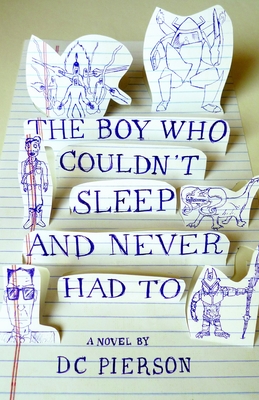 Funny, right? I definitely remember drawing stories on binder paper while in school, though my monsters looked less like aliens and more like escapees from a rogue taxidermist's shop.
Back to the book. It was incredibly fun. I haven't been a teenage boy, but I imagine that this is just what it's like, aside from having a best friend who has somehow escaped the biological need for sleep. It manages to hit that balance between obsessive self-examination and awkward enthusiasm to make me remember how it felt to be a shy person in the crazy zoo that is high school, and how, even though it was a hundred times more intense then (at least, in my memory), some things still feel exactly the same now. And, best of all, instead of dwelling on adolescent angst, the novel delivers an adventure complete with unabashed passion for Science Fiction (and I capitalize those words on purpose: we're talking ray guns and monsters from outer space here), surging right past the point of ridiculous and not caring at all.
by: James D. Watson
I started reading this because I wanted to know more about DNA, and I found it interesting, though less for the science (which made me feel like I was eavesdropping on a conversation about people I didn't know) than for the gossipy and unexpectedly sassy tone. You can almost hear the glee when he drops this sentence in at the beginning of chapter 20: "I was preoccupied with sex, but not of a type that needed encouragement." Have the mating habits of bacteria ever gotten such a titillating introduction?
The book is a description of a race as well as a discovery, but it manages to fit in some of the bizarre rivalry and secretiveness and sheer messiness of the people involved. And, of course, the thrill of winning. (It also makes me feel incredibly unexceptional, having not upturned the world of science and won a Nobel Prize by the age of 24.)
Solar
by: Ian McEwan
I loved Atonement so utterly and completely that my expectations for a McEwan novel are always unfairly high. I assume that it will move me to tears, keep me on my toes with shifting sympathies, and be a wickedly good story told on the edge of old-fashioned suspense.
This book made me sad. It's about a Nobel Prize winning scientist, but all the thrill of science has gone out of him and he shuffles along through middle age, cocooned in placid, depressing selfishness. There is nothing to like about him. Nothing. He is pitiable, cruel, frustrating, and sometimes disgusting. He is absolutely unsympathetic, and the entire novel felt like I was watching a piano getting winched higher and higher over his head while cringing in anticipation of the inevitable, messy crash. There are some sly and funny moments, but it's mostly a depressing portrait.
The Discreet Pleasures of Rejection
by: Martin Page
This is a bizarre little novel. It's about a young Parisian named Virgil whose girlfriend dumps him through a message on his answering machine, which is sad and ordinary, except that he doesn't remember her at all. The oddity carries on from there. Virgil's parents are in a circus. His best friend tells fortunes. He lives in an apartment building that is entirely occupied by prostitutes, who ask him to buy them cigarettes and items from the drugstore. It's absurd and completely unbelievable, but for some reason, this doesn't matter. Nothing seems real, but there are some moments that use all the weird and impossible details to hit, exactly on the nose, the feeling of being afraid that you've lost something that really matters, but you aren't sure whether you're making it up.
It didn't always work, but I enjoyed it. Except for the ending, which felt like the second of two and unnecessary clutter.
The Boy Who Couldn't Sleep and Never Had To
by: D. C. Pierson
I only picked up this book because of its cover. I am a shallow person. Let me find a picture of it.
Funny, right? I definitely remember drawing stories on binder paper while in school, though my monsters looked less like aliens and more like escapees from a rogue taxidermist's shop.Back to the book. It was incredibly fun. I haven't been a teenage boy, but I imagine that this is just what it's like, aside from having a best friend who has somehow escaped the biological need for sleep. It manages to hit that balance between obsessive self-examination and awkward enthusiasm to make me remember how it felt to be a shy person in the crazy zoo that is high school, and how, even though it was a hundred times more intense then (at least, in my memory), some things still feel exactly the same now. And, best of all, instead of dwelling on adolescent angst, the novel delivers an adventure complete with unabashed passion for Science Fiction (and I capitalize those words on purpose: we're talking ray guns and monsters from outer space here), surging right past the point of ridiculous and not caring at all.
Sunday, January 31, 2010
january reading
The Dud Avocado
by: Elaine Dundy
I found this novel both horribly charming and horribly irritating at once -- charming because Sally Jay, the heroine, is one of those wild, eccentric, unabashedly passionate young people who can't help but charm; and irritating because she is mostly passionate about being passionate, without having any conviction about the object of her enthusiasm. Maybe it's just because I've been wavering lately, casting about for the right direction, whatever that is, and falling down a rabbit hole of flighty bohemianism is too close for comfort.
How To Be Good
by: Nick Hornby
Oddly, this book reminded me, very much of McEwan's Amsterdam, which I read last month. Not because they were similar, at all, on a plot level, but because of the way they beat me to the punch, anticipating all the ungenerous, ungracious feelings that flashed through my mind while I was standing in their characters' shoes. Then they luxuriated in them, blew them up to force examination. These are the thoughts that you would be embarrassed to admit thinking, even to yourself. Hornby and McEwan hold them out to you on a plate and say, "Here you are, now why don't you eat them, slowly, and consider them because, really, they're yours."
What I like about Hornby is that he can be quite stark, but he's not bleak. There is humor everywhere. Some parts of this book are so funny that they warrant reading aloud to whoever is unfortunate enough to be within earshot. It's about divorce and virtue and falling out of love with somebody, and it's terribly, terribly funny.
The Swan Thieves
by: Elizabeth Kostova
The ARC of this book arrived at the bookstore in a shiny, blue chiffon drawstring bag. It looked very much like something that belonged in a lingerie store. It also has a gold spine. Not a golden, sort of metallic, but really not spine. Actual shiny gold that also looks like it might belong in a (rather more exciting perhaps) lingerie store.
Of course I had to read it.
Unfortunately, I didn't like it at all. It ticks off many of my pet obsessions: art (French Impressionism in this case), memory, deception, and a plasticity of time; but I found it incredibly dull. The narrative switches between five main strands, and every time I got to the end of one section, I was relieved to be moving on to something else. People were getting their hearts broken and going mad, having illicit affairs, pursuing art... And I did not care in the least. The entire novel revolves around the obsession one character harbors for another, and it tries to create mystery and suspense around the true nature of that obsession, but when I finally, finally got to the end, the attempt to withold information just felt like a flimsy excuse to string me along. There was no satisfaction to make the long slog (nearly 600 pages) worth it.
The Poison Eaters
by: Holly Black
This is an upcoming short story collection for young adults. It was immense fun, of the creepy and unsettling sort. The stories manage to be at once the kind of smooth, quickly consumed pieces that you read in one sitting, and prickly enough that you keep thinking about them for some time after the book is finished.
My favourites were "Paper Cuts Scissors" and "The Poison Eaters." The first story made me feel happy, giddy, and light. The second one disturbed me and infected me with a faint resignation.
Violent Cases
by: Neil Gaiman and Dave McKean
I really enjoyed this. Mr. Punch is still my favourite of Neil's graphic pieces, but this dances to a similar kind of music, sliding between what may have happened and what must have happened and what might have happened, but couldn't. Except maybe it should have.
It was scary and tasted dark.
The Bird Room
by: Chris Killen
Didn't like this one. Except for Corinne. I already complained about it here though.
The Perfect Scent
by: Chandler Burr
My friend, Kat, and I have conversations every now and then about the novel we are going to write together someday. It's going to be about perfume, among other things. This someday novel is my excuse for collecting books about scent and perfume and layman friendly neurology in a desultory way.
I don't have an especially keen sense of smell, but smells fascinate me. It disturbs me when I catch a whiff of something that hits me between the eyes with familiarity, but is somehow unplaceable. It makes me sad when I can't remember the smell of a friend, or of a building where I spent happy hours.
Chandler Burr writes brilliantly about a sense that is difficult to write about (Diane Ackerman says that we have such a limited vocabulary for the description of scent that we are forced to rob the words of other senses just to approximate smell with metaphor). He makes me imagine smells so solidly and precisely that I'm confident the perfume is there in my head, even if my imagined Shalimar is nothing like the real thing.
by: Elaine Dundy
I found this novel both horribly charming and horribly irritating at once -- charming because Sally Jay, the heroine, is one of those wild, eccentric, unabashedly passionate young people who can't help but charm; and irritating because she is mostly passionate about being passionate, without having any conviction about the object of her enthusiasm. Maybe it's just because I've been wavering lately, casting about for the right direction, whatever that is, and falling down a rabbit hole of flighty bohemianism is too close for comfort.
How To Be Good
by: Nick Hornby
Oddly, this book reminded me, very much of McEwan's Amsterdam, which I read last month. Not because they were similar, at all, on a plot level, but because of the way they beat me to the punch, anticipating all the ungenerous, ungracious feelings that flashed through my mind while I was standing in their characters' shoes. Then they luxuriated in them, blew them up to force examination. These are the thoughts that you would be embarrassed to admit thinking, even to yourself. Hornby and McEwan hold them out to you on a plate and say, "Here you are, now why don't you eat them, slowly, and consider them because, really, they're yours."
What I like about Hornby is that he can be quite stark, but he's not bleak. There is humor everywhere. Some parts of this book are so funny that they warrant reading aloud to whoever is unfortunate enough to be within earshot. It's about divorce and virtue and falling out of love with somebody, and it's terribly, terribly funny.
The Swan Thieves
by: Elizabeth Kostova
The ARC of this book arrived at the bookstore in a shiny, blue chiffon drawstring bag. It looked very much like something that belonged in a lingerie store. It also has a gold spine. Not a golden, sort of metallic, but really not spine. Actual shiny gold that also looks like it might belong in a (rather more exciting perhaps) lingerie store.
Of course I had to read it.
Unfortunately, I didn't like it at all. It ticks off many of my pet obsessions: art (French Impressionism in this case), memory, deception, and a plasticity of time; but I found it incredibly dull. The narrative switches between five main strands, and every time I got to the end of one section, I was relieved to be moving on to something else. People were getting their hearts broken and going mad, having illicit affairs, pursuing art... And I did not care in the least. The entire novel revolves around the obsession one character harbors for another, and it tries to create mystery and suspense around the true nature of that obsession, but when I finally, finally got to the end, the attempt to withold information just felt like a flimsy excuse to string me along. There was no satisfaction to make the long slog (nearly 600 pages) worth it.
The Poison Eaters
by: Holly Black
This is an upcoming short story collection for young adults. It was immense fun, of the creepy and unsettling sort. The stories manage to be at once the kind of smooth, quickly consumed pieces that you read in one sitting, and prickly enough that you keep thinking about them for some time after the book is finished.
My favourites were "Paper Cuts Scissors" and "The Poison Eaters." The first story made me feel happy, giddy, and light. The second one disturbed me and infected me with a faint resignation.
Violent Cases
by: Neil Gaiman and Dave McKean
I really enjoyed this. Mr. Punch is still my favourite of Neil's graphic pieces, but this dances to a similar kind of music, sliding between what may have happened and what must have happened and what might have happened, but couldn't. Except maybe it should have.
It was scary and tasted dark.
The Bird Room
by: Chris Killen
Didn't like this one. Except for Corinne. I already complained about it here though.
The Perfect Scent
by: Chandler Burr
My friend, Kat, and I have conversations every now and then about the novel we are going to write together someday. It's going to be about perfume, among other things. This someday novel is my excuse for collecting books about scent and perfume and layman friendly neurology in a desultory way.
I don't have an especially keen sense of smell, but smells fascinate me. It disturbs me when I catch a whiff of something that hits me between the eyes with familiarity, but is somehow unplaceable. It makes me sad when I can't remember the smell of a friend, or of a building where I spent happy hours.
Chandler Burr writes brilliantly about a sense that is difficult to write about (Diane Ackerman says that we have such a limited vocabulary for the description of scent that we are forced to rob the words of other senses just to approximate smell with metaphor). He makes me imagine smells so solidly and precisely that I'm confident the perfume is there in my head, even if my imagined Shalimar is nothing like the real thing.
Saturday, January 2, 2010
november and december (reading)
These two months were mostly full of fragments. I started a great many books, got bored, distracted, or otherwise engaged, and put them down. Some of them I intend to finish, but some of them were so forgettable, that I would have to start them over from the beginning, and then it probably wouldn't be worth the trouble.
So the only book that I read straight through, from page one to the end, was Amsterdam by Ian McEwan. It's a slim, tidy novel, definitely a thriller, and one of those stories that relies on the easily visible twist at the end to close itself off with uncomfortable smoothness and a sort of cruel wink. You see the end bearing down on the characters, and you know that it's going to flip their expectations inside out in the exact worse way. The thrill comes not from wanting to see what happens, but from the particulars of how the characters react. It's like "The Gift of the Magi," only not nice at all.
I couldn't sleep the night after I finished it. There were just so many awful people in the story, and they were such a weird mixture of believable and unbelievable, with the believable parts being all their selfish, inhumane, angry, jealous, delusional thoughts. The kind of thoughts that flicker on the edge of mine, sometimes. The kind of thoughts that would make you feel like a bad person if you ever grabbed onto them and actually thought them with purpose instead of flinging them away. The unbelievable (and fascinating) part was the way the characters luxuriated and wallowed in them, taking them to ridiculous heights that were almost funny except that you could see how they got there.
So the only book that I read straight through, from page one to the end, was Amsterdam by Ian McEwan. It's a slim, tidy novel, definitely a thriller, and one of those stories that relies on the easily visible twist at the end to close itself off with uncomfortable smoothness and a sort of cruel wink. You see the end bearing down on the characters, and you know that it's going to flip their expectations inside out in the exact worse way. The thrill comes not from wanting to see what happens, but from the particulars of how the characters react. It's like "The Gift of the Magi," only not nice at all.
I couldn't sleep the night after I finished it. There were just so many awful people in the story, and they were such a weird mixture of believable and unbelievable, with the believable parts being all their selfish, inhumane, angry, jealous, delusional thoughts. The kind of thoughts that flicker on the edge of mine, sometimes. The kind of thoughts that would make you feel like a bad person if you ever grabbed onto them and actually thought them with purpose instead of flinging them away. The unbelievable (and fascinating) part was the way the characters luxuriated and wallowed in them, taking them to ridiculous heights that were almost funny except that you could see how they got there.
Sunday, November 22, 2009
october reading
Johannes Cabal the Necromancer
by: Jonathan Howard
This book was incredible fun, except for when it wasn't. I'm partial to stories about deals with the devil, and partial to stories about circuses and carnivals, and this is a novel about both. There were so many compelling, gory, sly, and touching fragments (yes, touching; it's not quite the word I'm looking for, but I can't think of one that's less generic... something that hits you in the back of the throat, anyway, or the bottom of your stomach), but they didn't stick together for me. I didn't feel the locomotive bearing down; didn't feel compelled to read at inconvenient hours. It felt like a box of shiny trinkets and, no matter how hard I shook it, it never sorted itself out into the wonderful device that I wanted it to be.
Lux the Poet
by: Martin Millar
I like Martin Millar. I like how briskly his stories move, and I like how they remain somehow stripped of padding despite the way they veer through a totally bizarre mash-up of things: ghosts and fairies and Led Zeppelin and drug addicts and sex and poems. He is very funny. But not funny in a slapstick sort of way. He lays out the absurdity of being a person, the way we can be so incredibly good and surprising right next to the way we can be downright hideous. I do think that I would be much more obsessed with Millar though if I had been a young person in the 70s, as opposed to not having existed yet. There's a flavor in his books that I feel I don't have under my skin. I can appreciate it, but I can't revel in it.
Coraline
by: Neil Gaiman
Coraline is one of my favourite books. I find it utterly terrifying and comforting, and also the kind of book that is dangerous for me to read before bed because it invades my dreams. I read it again because it was the selection for the YA bookclub that my sister and I host at work. I had forgotten how much it feels like the stories I liked best when I was younger, the ones that turned corners of the world inside out so I could see that the shadowy things that I almost saw were actually real. It's a small-ish book, but it wraps around your head completely and lodges there, like there were bits of it that you already knew.
The Ghost in Love
by: Jonathan Carroll
I thought I didn't like Jonathan Carroll's novels. I really enjoyed some of his short stories, but disliked The Marriage of Sticks so much that it persuaded me to leave all of his other novels on the shelf. I only broke down and read this one because I was tired of everyone telling me that it was "my sort of thing, you know, beautiful and sad and full of weird stuff." I was secretly hoping that it wouldn't be my sort of thing at all. But there is a ghost in it who loves to cook, and talking dogs, and little pieces that really are beautiful, sad, weird, &etc. that made me want to thump the book's cover and say, "that's exactly right!"
The Wild Things
by: Dave Eggers
I thought that I would love this book, but it annoyed me so much that I wanted to yell at it every night when I read it before bed. I recently read an Eggers short story that knocked my socks off with its merciless wittiness and odd perspective. I was prepared to be similarly blown away by this incarnation of a picture book that I always found vaguely upsetting. I thought it would be like one of those weird little branches that people sometimes force into bloom by keeping them in vases -- extremely artificial and somehow fascinating because of how out of context it is. The novel grated on me though. It made the Wild Things into giant personifications of issues. It made Max into a child with issues. It made the story into one of those contemporary allegories about dealing with issues, which I guess might be what so many books that I do like boil down to, but here it was so obvious that I felt like I was drowning in it.
by: Jonathan Howard
This book was incredible fun, except for when it wasn't. I'm partial to stories about deals with the devil, and partial to stories about circuses and carnivals, and this is a novel about both. There were so many compelling, gory, sly, and touching fragments (yes, touching; it's not quite the word I'm looking for, but I can't think of one that's less generic... something that hits you in the back of the throat, anyway, or the bottom of your stomach), but they didn't stick together for me. I didn't feel the locomotive bearing down; didn't feel compelled to read at inconvenient hours. It felt like a box of shiny trinkets and, no matter how hard I shook it, it never sorted itself out into the wonderful device that I wanted it to be.
Lux the Poet
by: Martin Millar
I like Martin Millar. I like how briskly his stories move, and I like how they remain somehow stripped of padding despite the way they veer through a totally bizarre mash-up of things: ghosts and fairies and Led Zeppelin and drug addicts and sex and poems. He is very funny. But not funny in a slapstick sort of way. He lays out the absurdity of being a person, the way we can be so incredibly good and surprising right next to the way we can be downright hideous. I do think that I would be much more obsessed with Millar though if I had been a young person in the 70s, as opposed to not having existed yet. There's a flavor in his books that I feel I don't have under my skin. I can appreciate it, but I can't revel in it.
Coraline
by: Neil Gaiman
Coraline is one of my favourite books. I find it utterly terrifying and comforting, and also the kind of book that is dangerous for me to read before bed because it invades my dreams. I read it again because it was the selection for the YA bookclub that my sister and I host at work. I had forgotten how much it feels like the stories I liked best when I was younger, the ones that turned corners of the world inside out so I could see that the shadowy things that I almost saw were actually real. It's a small-ish book, but it wraps around your head completely and lodges there, like there were bits of it that you already knew.
The Ghost in Love
by: Jonathan Carroll
I thought I didn't like Jonathan Carroll's novels. I really enjoyed some of his short stories, but disliked The Marriage of Sticks so much that it persuaded me to leave all of his other novels on the shelf. I only broke down and read this one because I was tired of everyone telling me that it was "my sort of thing, you know, beautiful and sad and full of weird stuff." I was secretly hoping that it wouldn't be my sort of thing at all. But there is a ghost in it who loves to cook, and talking dogs, and little pieces that really are beautiful, sad, weird, &etc. that made me want to thump the book's cover and say, "that's exactly right!"
The Wild Things
by: Dave Eggers
I thought that I would love this book, but it annoyed me so much that I wanted to yell at it every night when I read it before bed. I recently read an Eggers short story that knocked my socks off with its merciless wittiness and odd perspective. I was prepared to be similarly blown away by this incarnation of a picture book that I always found vaguely upsetting. I thought it would be like one of those weird little branches that people sometimes force into bloom by keeping them in vases -- extremely artificial and somehow fascinating because of how out of context it is. The novel grated on me though. It made the Wild Things into giant personifications of issues. It made Max into a child with issues. It made the story into one of those contemporary allegories about dealing with issues, which I guess might be what so many books that I do like boil down to, but here it was so obvious that I felt like I was drowning in it.
Saturday, October 24, 2009
september reading, part 2
I forgot about this bit...
Poe's Children
edited by: Peter Straub
This is the first book I've ever picked up from the horror section of a bookstore. It has a terrifying cover: some sort of shadow box filled with dolls in pieces and eyeballs, shadowy and gruesome and one of those covers that I actually make sure to turn the book facedown on the bedside table because I can't stand the thought of it looking at me while I sleep. The stories themselves were mostly not the kind of horror that keeps me awake at night, but the kind of insidious, creeping unease that stuck in my head and invaded my dreams. This is an anthology of what Straub calls "new horror," and also, "beautiful, disturbing, and fearless." (His introduction is an interesting essay on genres, and the excitement of work that blurs or ignores the boundaries between them.) The stories are exceptionally well written. Some of them seem more effective than others, though I think that's to be expected with any stories that make a point of titillating fear... fear being such a personal thing, after all. They all excited me though, and I think it's because they all got around to the fear in such different, elegant ways.
What I Talk About When I Talk About Running
by: Haruki Murakami
Basically, Murakami makes me feel like I am an underachieving, lazy, lump of a human being. He does this by talking about his odd, obsessive, extremely effective routines in the most straightforward and everyday manner. At the end of the book, I had started to think that, of course, strapping on a pair of running shoes and training for an ultramarathon was the most obvious thing in the world to do. I should just start right now. Not to mention the writing of strange and brilliant novels. One just needs to start such projects and then finish them, and that is that. I still can't decide if I find this inspiring or disheartening.
Going Bovine
by: Libba Bray
There were parts of this novel that I LOVED (capital letters and all), and parts that I did not like at all. The first category is filled with the insane, wildly disparate bits that only stick together because of the solidity and energy of the main character. I believe in him, because he is rude and real and has problems that aren't laid out in soppy, vague issues, so I believe in the stuff that he tells me, even if it veers from the luscious desirability of his sister's friends to angels in combat boots and graffitied wings. The second category is for things that I found silly, or flimsy, or obvious ... the sort of things that made me feel like someone was whacking me over the head and yelling, "Have you got it? Have you got it? Are you sure?" It didn't entirely connect up for me; the lines didn't quite come together, so I ended up not being sure about the whole thing.
Nocturnes
by: Kazuo Ishiguro
Ishiguro is the kind of writer who peels your heart with thin, gentle, almost surgical strokes, laying it bare while hardly leaving even a fingerprint on it. And then he drops it into a vat of salt water. The shock is so huge that you can't remember the moment when it first hit you. The Remains of the Day is one of my very favourite novels, and these short stories don't come close to touching the huge, brain-breaking effect that it had on me, but they are still good in a understated way. "Quietly devastating" is a cliche that is probably tailored precisely for any description of Ishiguro's work. He somehow manages to present a story in such a clear, stripped down, disciplined way that you fill the space around and through it with all of your own experience. They're not opaque or vague in the way that kind of story can be. They just encourage you to slide your life into them, so when the devastating part comes along, it usually beats your breath out of you.
Poe's Children
edited by: Peter Straub
This is the first book I've ever picked up from the horror section of a bookstore. It has a terrifying cover: some sort of shadow box filled with dolls in pieces and eyeballs, shadowy and gruesome and one of those covers that I actually make sure to turn the book facedown on the bedside table because I can't stand the thought of it looking at me while I sleep. The stories themselves were mostly not the kind of horror that keeps me awake at night, but the kind of insidious, creeping unease that stuck in my head and invaded my dreams. This is an anthology of what Straub calls "new horror," and also, "beautiful, disturbing, and fearless." (His introduction is an interesting essay on genres, and the excitement of work that blurs or ignores the boundaries between them.) The stories are exceptionally well written. Some of them seem more effective than others, though I think that's to be expected with any stories that make a point of titillating fear... fear being such a personal thing, after all. They all excited me though, and I think it's because they all got around to the fear in such different, elegant ways.
What I Talk About When I Talk About Running
by: Haruki Murakami
Basically, Murakami makes me feel like I am an underachieving, lazy, lump of a human being. He does this by talking about his odd, obsessive, extremely effective routines in the most straightforward and everyday manner. At the end of the book, I had started to think that, of course, strapping on a pair of running shoes and training for an ultramarathon was the most obvious thing in the world to do. I should just start right now. Not to mention the writing of strange and brilliant novels. One just needs to start such projects and then finish them, and that is that. I still can't decide if I find this inspiring or disheartening.
Going Bovine
by: Libba Bray
There were parts of this novel that I LOVED (capital letters and all), and parts that I did not like at all. The first category is filled with the insane, wildly disparate bits that only stick together because of the solidity and energy of the main character. I believe in him, because he is rude and real and has problems that aren't laid out in soppy, vague issues, so I believe in the stuff that he tells me, even if it veers from the luscious desirability of his sister's friends to angels in combat boots and graffitied wings. The second category is for things that I found silly, or flimsy, or obvious ... the sort of things that made me feel like someone was whacking me over the head and yelling, "Have you got it? Have you got it? Are you sure?" It didn't entirely connect up for me; the lines didn't quite come together, so I ended up not being sure about the whole thing.
Nocturnes
by: Kazuo Ishiguro
Ishiguro is the kind of writer who peels your heart with thin, gentle, almost surgical strokes, laying it bare while hardly leaving even a fingerprint on it. And then he drops it into a vat of salt water. The shock is so huge that you can't remember the moment when it first hit you. The Remains of the Day is one of my very favourite novels, and these short stories don't come close to touching the huge, brain-breaking effect that it had on me, but they are still good in a understated way. "Quietly devastating" is a cliche that is probably tailored precisely for any description of Ishiguro's work. He somehow manages to present a story in such a clear, stripped down, disciplined way that you fill the space around and through it with all of your own experience. They're not opaque or vague in the way that kind of story can be. They just encourage you to slide your life into them, so when the devastating part comes along, it usually beats your breath out of you.
Saturday, October 3, 2009
september reading, part 1
Two parts to this batch of books. I'm feeling talkative.
The Children's Book
by: A. S. Byatt
When it comes to Byatt, I'm torn. I hated Possession, found it dusty and dully irritating, though I probably read it when I was too young to let it get a grip on my imagination. The Little Black Book of Stories thrilled me, but in that infectious, chilling way where something lodges in your imagination and lingers despite any attempts to not think about it. There's a streak of cruelty through Byatt's work that disturbs me and fascinates me at the same time.
I read The Children's Book for work. I wouldn't usually volunteer to read a 700 page ARC, but I was curious. The novel is, in part, about stories and storytelling. It's about people who hurt each other, mostly from selfishness and claustrophobic self absorption, rather than focussed malice. It's also about England just before the first World War, and how that particular world crumbled and was lost. It's an epic, and I don't usually read epics because I find it difficult to care about characters when there is a legion of them I have to remember. Byatt throws in pages and pages of historical ballast, and sometimes I felt like I was getting a history lesson instead of reading a story, but her characters managed to latch onto my imagination through all the padding, and I couldn't stop reading.
There are fragments of fairy tales in there, stories within the story, that made me wish I could read the fictional book that contained the rest of them. I think that, in another life, Byatt could have been a stunning, creepily effective writer of doorstop fantasy novels.
It's lovely, old-fashioned writing, with a Narrator who feeds you the world and who knows more than you or anyone else. It bogs down in places, but that cruelty is in there to prick and shock.
The Ask and the Answer
by: Patrick Ness
I was madly obsessed with The Knife of Never Letting Go, so I was practically counting the days down until this came out (my hints to the kid's department at work being woefully ineffective in producing an ARC). I still think that Ness is a genius when it comes to the breathless, galloping pace of these books. I don't know how he manages it. Even when the story happens in an enclosed space, it feels like its rushing at high speed across vast distances.
I didn't like this one as much as the first one though, and I think it's because the story has less of the collisions and astonishment that comes from running away into an entirely unfamiliar world. I still want to know what happens next, and I still love the characters, but there's less of that desperate shine of strangeness that was so thrilling in the first book.
The Children's Book
by: A. S. Byatt
When it comes to Byatt, I'm torn. I hated Possession, found it dusty and dully irritating, though I probably read it when I was too young to let it get a grip on my imagination. The Little Black Book of Stories thrilled me, but in that infectious, chilling way where something lodges in your imagination and lingers despite any attempts to not think about it. There's a streak of cruelty through Byatt's work that disturbs me and fascinates me at the same time.
I read The Children's Book for work. I wouldn't usually volunteer to read a 700 page ARC, but I was curious. The novel is, in part, about stories and storytelling. It's about people who hurt each other, mostly from selfishness and claustrophobic self absorption, rather than focussed malice. It's also about England just before the first World War, and how that particular world crumbled and was lost. It's an epic, and I don't usually read epics because I find it difficult to care about characters when there is a legion of them I have to remember. Byatt throws in pages and pages of historical ballast, and sometimes I felt like I was getting a history lesson instead of reading a story, but her characters managed to latch onto my imagination through all the padding, and I couldn't stop reading.
There are fragments of fairy tales in there, stories within the story, that made me wish I could read the fictional book that contained the rest of them. I think that, in another life, Byatt could have been a stunning, creepily effective writer of doorstop fantasy novels.
It's lovely, old-fashioned writing, with a Narrator who feeds you the world and who knows more than you or anyone else. It bogs down in places, but that cruelty is in there to prick and shock.
The Ask and the Answer
by: Patrick Ness
I was madly obsessed with The Knife of Never Letting Go, so I was practically counting the days down until this came out (my hints to the kid's department at work being woefully ineffective in producing an ARC). I still think that Ness is a genius when it comes to the breathless, galloping pace of these books. I don't know how he manages it. Even when the story happens in an enclosed space, it feels like its rushing at high speed across vast distances.
I didn't like this one as much as the first one though, and I think it's because the story has less of the collisions and astonishment that comes from running away into an entirely unfamiliar world. I still want to know what happens next, and I still love the characters, but there's less of that desperate shine of strangeness that was so thrilling in the first book.
Saturday, September 12, 2009
august reading
 Geektastic: Stories from the Nerd Herd
 edited by: Holly Black and Cecil Castellucci
I couldn't resist this book. The title and cover and the fact that it contains stories by Kelly Link and M. T. Anderson, both of which I had never read before... Resistance was utterly, spectacularly non-existent. There are many things in this book that I don't have any personal experience with: RPGs and MMORPGs and The Rocky Horror Picture Show and Klingons, for instance. But there was so much that was and is familiar: the awkwardness of people understanding each other and the blinding joy of a singular enthusiasm.
According to good old Webster, a geek is an enthusiast or expert (or, a carnival performer who bites off the heads of live chickens or snakes, no doubt with both enthusiasm and expertise).
These are short stories for young people. All of them are, at the least, enjoyable. Some were wonderful and bizarre, and my favourites were "The King of Pelinesse" by M. T. Anderson, "Secret Identity" by Kelly Link, and "It's Just a Jump to the Left" by Libba Bray.
American Chinatown
by: Bonnie Tsui
I am so not into the whole Asian American heritage thing. My family has been here for so long that any connection I ever had to Asia is extremely thin and buried beneath a large mountain of ignorance. I would never have picked up this book except that I was asked to read it for work.
I've lately been fascinated with neighborhoods and how they develop into certain kinds of places with personalities and texture and tendencies toward setting particular interactions in motion. Chinatown is one of those weird uber-neighborhoods that appear in cities all over the world, and that is fascinating. The book itself though was a little flat. There was such possibility for pungent, overwhelming specifics, but instead it was informative, smooth. I kept putting it down.
Palimpsest
By: Catherynne M. Valente
I wanted to love this book. I was prepared to love it because many people told me that I would, and because I've read some of Ms. Valente's other things that have left me feeling slavish admiration. Instead, I thought it was interesting. There was such lush, extravagance, and it was all shockingly beautiful, but for some reason, I never understood the story with the part of me that needs to understand it to make it something I'll cry over and rage about. Maybe I read it at an unfortunate time (I'm impatient with poetic things lately... I want inelegant, messy things that explode and stab you with their rough edges). I got parts of it. Parts of it felt like pieces taken straight from a dream that I had forgotten. And it's built on such a brilliant idea.
I did discover that sex scenes -- even very beautifully written ones -- begin to bore me after too many of them go past.
Save the Deli
By: David Sax
Another book read for work. I write reviews for work, but in them I say only the nice things. Everything that I like about a book goes in there, and their sole point is to make someone else think, oh maybe I should have a look at that. I said that this book was interesting, and that it made me hungry. I didn't say that it failed to convince me that Jewish delis are worthy of passionate, particular obsession or fascination, which I think should be the point of these quirky nonfiction books.
Friday, August 21, 2009
july reading
I do realise that I've almost lost the entire month of August by now, but I did read some things in July and this, briefly, is what I thought of them:
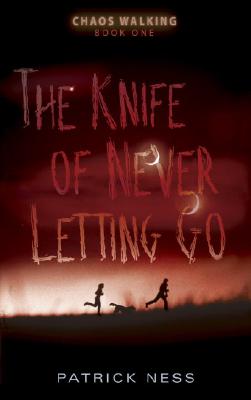 The Knife of Never Letting Go by Patrick Ness
This book glued itself to my fingers. I couldn't turn the pages fast enough, I couldn't read it fast enough. The speed of the story, the intensity of it, throttled me so that the only thing I could do was stay up long into the night and cram myself through the pages. Ness captures voices so finely and particularly that the characters burst out of them, and any extra description is just the layering of small detail because you've already heard them speak and you know, immediately, who they are.
It's not a subtle book, but it takes on a great deal of fear, anger, and violence, and the difference between running away from those things and facing them. It's the kind of story that needs the space that stripped down, broad strokes can give, and the characters are compelling enough so that you never feel like you are being dragged along behind them. You are inside the story with them, and you feel their world cracking open, and then closing in on them again. It's the most thrilling book I've read in a long time, as all the other ones that are meant to cause suspense and thrills have been distressingly tame lately. Not that they're necessarily bad, they just haven't been compelling enough for me to sacrifice my entire allotment of sleep to them.
The Sweetness at the Bottom of the Pie by Alan Bradley
This is (as one bookstore customer described this sort of book to me) "a cozy mystery despite the killing." I love the conceit of a very young, very brilliant, and very spoiled girl, who is also obsessed with chemistry, as the unofficial detective investigating a murder. I didn't find any of it believable, and the weird thing is that once I got over that, it didn't bother me very much. Flavia de Luce is only supposed to be eleven, but she doesn't sound like any eleven-year old I can imagine, not even the most prodigious or precocious. It's an easily consumed book, sprinkled with quirky details about chemistry and postage stamps, and every now and then Bradley manages these elegant, shiny turns of phrase that satisfy completely, but I didn't find the mystery of it very compelling.
Little Brother by Cory Doctorow
I had been meaning to read this for several months. I'm not sure why it took me so long to get around to it. It's a well put together story, and potentially a very important book because of the way it shows the world, and where it could be going, and what anyone with a decent amount of independent thought and desire can do about it. I liked the directness of it, the way it takes the plain honesty that some YA books can have and uses it as a way to deliver both a story about people and a story about technology and politics. It made me think, and it made me notice things. The characters feel like real people: they sound like teenagers and they do things that teenagers would do, and there's this whole mess of feelings and confusion and ideals that makes them seem more defined instead of less. I also couldn't put this one down.
***
Things I learned this week:
It's "Google-plex," not "Google-land."
We do not have any serious books on Opus Dei in our store. (however, I did meet a man who told me that he was a member of Opus Dei for 25 years. I had to tell him that the only thing I know about the organization is that Dan Brown makes use of it in The Da Vinci Code.)
Taxidermied horse heads are disturbing, even if they do have jolly looking smiles. They remind me of poor Falada in "The Goose Girl."
The Knife of Never Letting Go by Patrick NessThis book glued itself to my fingers. I couldn't turn the pages fast enough, I couldn't read it fast enough. The speed of the story, the intensity of it, throttled me so that the only thing I could do was stay up long into the night and cram myself through the pages. Ness captures voices so finely and particularly that the characters burst out of them, and any extra description is just the layering of small detail because you've already heard them speak and you know, immediately, who they are.
It's not a subtle book, but it takes on a great deal of fear, anger, and violence, and the difference between running away from those things and facing them. It's the kind of story that needs the space that stripped down, broad strokes can give, and the characters are compelling enough so that you never feel like you are being dragged along behind them. You are inside the story with them, and you feel their world cracking open, and then closing in on them again. It's the most thrilling book I've read in a long time, as all the other ones that are meant to cause suspense and thrills have been distressingly tame lately. Not that they're necessarily bad, they just haven't been compelling enough for me to sacrifice my entire allotment of sleep to them.
The Sweetness at the Bottom of the Pie by Alan Bradley
This is (as one bookstore customer described this sort of book to me) "a cozy mystery despite the killing." I love the conceit of a very young, very brilliant, and very spoiled girl, who is also obsessed with chemistry, as the unofficial detective investigating a murder. I didn't find any of it believable, and the weird thing is that once I got over that, it didn't bother me very much. Flavia de Luce is only supposed to be eleven, but she doesn't sound like any eleven-year old I can imagine, not even the most prodigious or precocious. It's an easily consumed book, sprinkled with quirky details about chemistry and postage stamps, and every now and then Bradley manages these elegant, shiny turns of phrase that satisfy completely, but I didn't find the mystery of it very compelling.
Little Brother by Cory Doctorow
I had been meaning to read this for several months. I'm not sure why it took me so long to get around to it. It's a well put together story, and potentially a very important book because of the way it shows the world, and where it could be going, and what anyone with a decent amount of independent thought and desire can do about it. I liked the directness of it, the way it takes the plain honesty that some YA books can have and uses it as a way to deliver both a story about people and a story about technology and politics. It made me think, and it made me notice things. The characters feel like real people: they sound like teenagers and they do things that teenagers would do, and there's this whole mess of feelings and confusion and ideals that makes them seem more defined instead of less. I also couldn't put this one down.
***
Things I learned this week:
It's "Google-plex," not "Google-land."
We do not have any serious books on Opus Dei in our store. (however, I did meet a man who told me that he was a member of Opus Dei for 25 years. I had to tell him that the only thing I know about the organization is that Dan Brown makes use of it in The Da Vinci Code.)
Taxidermied horse heads are disturbing, even if they do have jolly looking smiles. They remind me of poor Falada in "The Goose Girl."
Saturday, July 18, 2009
june reading
You would think that a trip to Hawaii is the perfect time to swallow down a great stack of books. I assure you that it isn't. Not, at least, if you are hauling several thousand pounds of copper wire to the recycling center, chopping down banana trees, and going camping with 60-something members of your extended family. I usually read in bed before going to sleep, but in Hawaii, I skipped all that and just clunked straight into unconciousness. Still, these are the books I read.
The City and the City
by China Mieville
This book hurt my head while I was reading it. It is set in two cities, somewhere like Eastern Europe probably, that exist on top of each other, in the same place, only kept separate by the insistence that the residents of each meticulously unsee the other. It's a wonderful idea, a totally bizarre and crazy one, and it makes your brain have to twist around corners to picture it. It felt like looking at those drawings that are two things at once--a goblet and two faces; an old lady and a young one--but your brain can't see them both, so it flips them back and forth, back and forth. The actual story is a murder mystery, an investigation with the quiet, grey desperation of the hardboiled type, and I didn't find those aspects as tense and dangerous, or as satisfying, as I wanted them to be. But there's this scene of a shooting across the two cities that explodes with weirdness and frustration and it's absolutely fantastic.
A Natural History of the Senses
by Diane Ackerman
Love this book. It is crammed with thoughts and facts and descriptions about the senses, and about how what people sense shapes their interaction with each other, with the world, with themselves. Reading it was like wallowing in the glory of being a physical creature. It suddenly felt so intensely luxurious to be human.
I bought it as research for the novel about perfume that my friend, the lovely Kat, and I are going to write someday. But the thing is dripping with tidbits and ideas: psychological dwarfism, a museum in Japan that has human skin tattooed by master tattoo artists in its collection, the untranslatable specificity of music...
Jitterbug Perfume
by Tom Robbins
There is so much about this book that made me giddy.
There is so much about this book that made me impatient.
It's a romp. It's ridiculous, over-the-top, completely strange, and distractingly beautiful. It is also tiresome (at points and briefly) and repetitive when it bangs certain things against your head in slightly different shapes in case you didn't receive the proper bruises the first time. It starts with an ode to beets. It includes a mad perfumer who wears a whale mask when contemplating scent and believes the dinosaurs were wiped out by the sensuous overkill of flowers. There is quite a lot of sex. There is also an extraordinary sentence which goes: "The highest function of love is that it makes the loved one a unique and irreplaceable being."
The Angel's Game
by Carlos Ruiz Zafon
This book disappointed me. Maybe I was looking forward to it with too much slobbery excitement. I adored The Shadow of the Wind and wanted to read this one in the same rush, staying up all night to devour the wonderful, odd version of Spain where stories bleed out of all the shadows.
The characters irritated me. There was blood, but it was boring blood without any weight behind it, and the ending folded everything up in a way that made the rest of the book seem silly. I skimmed the last hundred pages.
I also read the 55th/56th issue of the Sonora Review, which has two of the most disturbing covers that I've ever seen on a magazine. Highlights: tributes to David Foster Wallace and a story by the man himself ("/Solomon Silverfish/") that made me wish I had read him before so I could have appreciated his work while he was still in the world. Also, Etgat Keret is interesting, spiky, and loud on the imagination.
The City and the City
by China Mieville
This book hurt my head while I was reading it. It is set in two cities, somewhere like Eastern Europe probably, that exist on top of each other, in the same place, only kept separate by the insistence that the residents of each meticulously unsee the other. It's a wonderful idea, a totally bizarre and crazy one, and it makes your brain have to twist around corners to picture it. It felt like looking at those drawings that are two things at once--a goblet and two faces; an old lady and a young one--but your brain can't see them both, so it flips them back and forth, back and forth. The actual story is a murder mystery, an investigation with the quiet, grey desperation of the hardboiled type, and I didn't find those aspects as tense and dangerous, or as satisfying, as I wanted them to be. But there's this scene of a shooting across the two cities that explodes with weirdness and frustration and it's absolutely fantastic.
A Natural History of the Senses
by Diane Ackerman
Love this book. It is crammed with thoughts and facts and descriptions about the senses, and about how what people sense shapes their interaction with each other, with the world, with themselves. Reading it was like wallowing in the glory of being a physical creature. It suddenly felt so intensely luxurious to be human.
I bought it as research for the novel about perfume that my friend, the lovely Kat, and I are going to write someday. But the thing is dripping with tidbits and ideas: psychological dwarfism, a museum in Japan that has human skin tattooed by master tattoo artists in its collection, the untranslatable specificity of music...
Jitterbug Perfume
by Tom Robbins
There is so much about this book that made me giddy.
There is so much about this book that made me impatient.
It's a romp. It's ridiculous, over-the-top, completely strange, and distractingly beautiful. It is also tiresome (at points and briefly) and repetitive when it bangs certain things against your head in slightly different shapes in case you didn't receive the proper bruises the first time. It starts with an ode to beets. It includes a mad perfumer who wears a whale mask when contemplating scent and believes the dinosaurs were wiped out by the sensuous overkill of flowers. There is quite a lot of sex. There is also an extraordinary sentence which goes: "The highest function of love is that it makes the loved one a unique and irreplaceable being."
The Angel's Game
by Carlos Ruiz Zafon
This book disappointed me. Maybe I was looking forward to it with too much slobbery excitement. I adored The Shadow of the Wind and wanted to read this one in the same rush, staying up all night to devour the wonderful, odd version of Spain where stories bleed out of all the shadows.
The characters irritated me. There was blood, but it was boring blood without any weight behind it, and the ending folded everything up in a way that made the rest of the book seem silly. I skimmed the last hundred pages.
I also read the 55th/56th issue of the Sonora Review, which has two of the most disturbing covers that I've ever seen on a magazine. Highlights: tributes to David Foster Wallace and a story by the man himself ("/Solomon Silverfish/") that made me wish I had read him before so I could have appreciated his work while he was still in the world. Also, Etgat Keret is interesting, spiky, and loud on the imagination.
Subscribe to:
Posts (Atom)